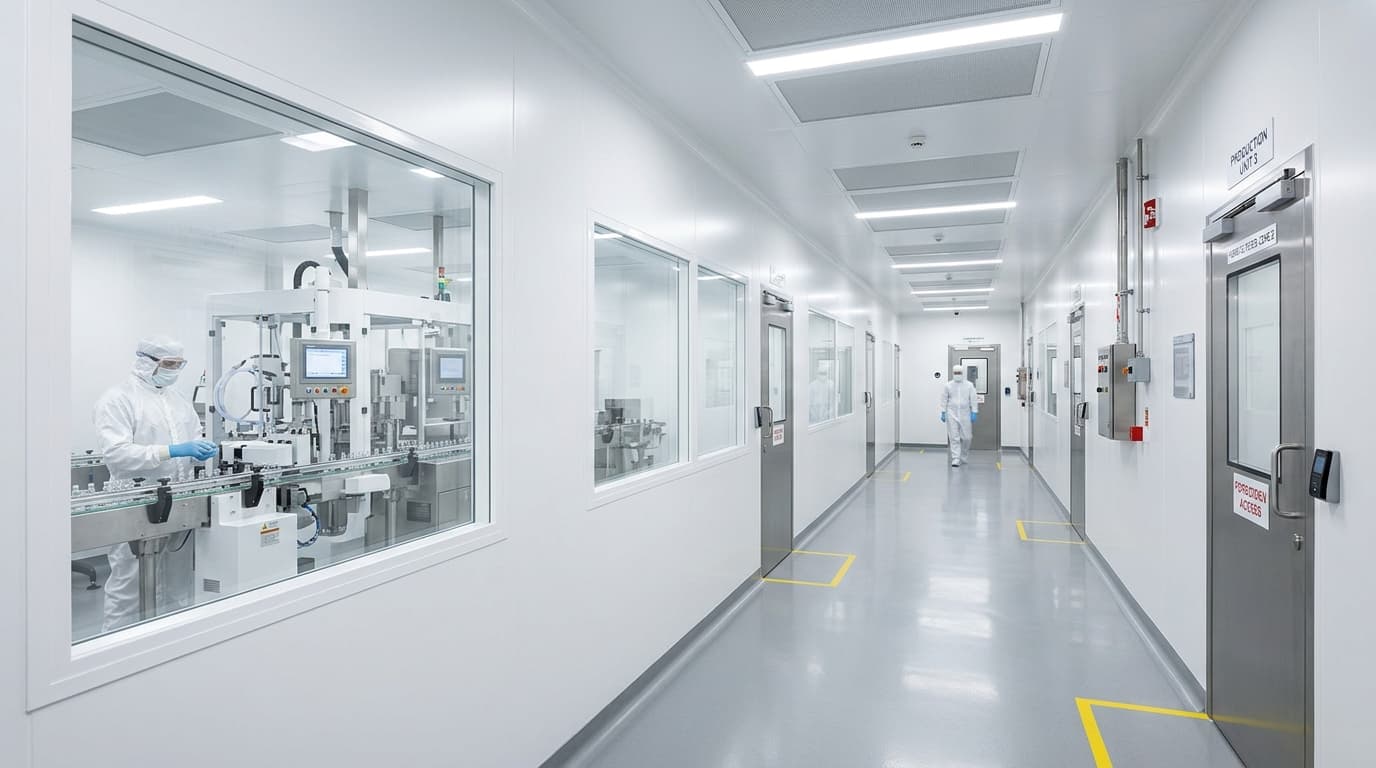
For hospital operating theaters (OT), intensive care units (ICU), and patient recovery wards in Bangladesh, homogeneous antibacterial sheet vinyl is preferred for its acoustic sound dampening (up to 15 dB), foot comfort, and welded joints with coving. For high-traffic hospital corridors, pharmacies, laboratories, and heavy equipment plant rooms, self-leveling epoxy delivers higher scratch resistance, seamless durability, and lower lifecycle cost.
Key Engineering Takeaways
- Homogeneous sheet vinyl incorporates antibacterial polyurethane reinforcement (PUR) with heat-welded joints preventing liquid seepage.
- Vinyl provides superior acoustic sound absorption, significantly reducing trolley wheel rattle in sensitive hospital wards.
- Self-leveling epoxy is completely seamless without any weld rods, providing superior resistance against iodine, betadine, and heavy bed traffic.
- Both systems must incorporate 100mm seamless radius wall coving to comply with Directorate General of Health Services (DGHS) hygiene standards.
1. Healthcare Surface Requirements in Bangladesh
Modern healthcare architecture across Dhaka and major divisional hospitals requires strict infection control, acoustic comfort for recovering patients, resistance to chemical disinfectants, and zero slip hazards under wet emergency conditions.
Hospital planners constantly evaluate whether homogeneous PVC sheet vinyl or self-leveling epoxy coating represents the superior specification for different hospital zones.
2. The Pros and Cons of Homogeneous Sheet Vinyl
Homogeneous vinyl consists of a single solid layer of PVC through its entire thickness with embedded antibacterial additives.
Advantages: Soft and cushioned underfoot, offering up to 15 dB of acoustic impact noise dampening. Reduces fatigue for nurses standing on 12-hour shifts. Available in calming architectural colors.
Limitations: Requires thermal heat welding of sheet seams with vinyl weld rods. If welders are inexperienced, joint seams can dislodge over years of aggressive scrubbing.
3. The Pros and Cons of Self-Leveling Epoxy in Healthcare
Advantages: 100% joint-free with zero seams across entire corridors and operating suites. Extremely hard wear layer resisting heavy rolling equipment (C-arm scanners, ultrasound carts, intensive care beds) without indentation. Impervious to Betadine, surgical iodine, and aggressive cleaning chemicals.
Limitations: Harder and more reflective underfoot with less acoustic dampening compared to vinyl.
Frequently Asked Questions
Which system is recommended for hospital Operating Theaters (OT)?
Both are widely approved. Many modern hospitals specify conductive/antistatic homogeneous sheet vinyl or conductive self-leveling epoxy to prevent static interference with sensitive anesthesia and heart monitoring equipment.
How long does commercial vinyl last compared to epoxy in a hospital?
Quality homogeneous vinyl lasts 10 to 15 years with proper polish maintenance. Self-leveling epoxy lasts 10 to 12 years and can be recoated quickly without ripping up subfloors.