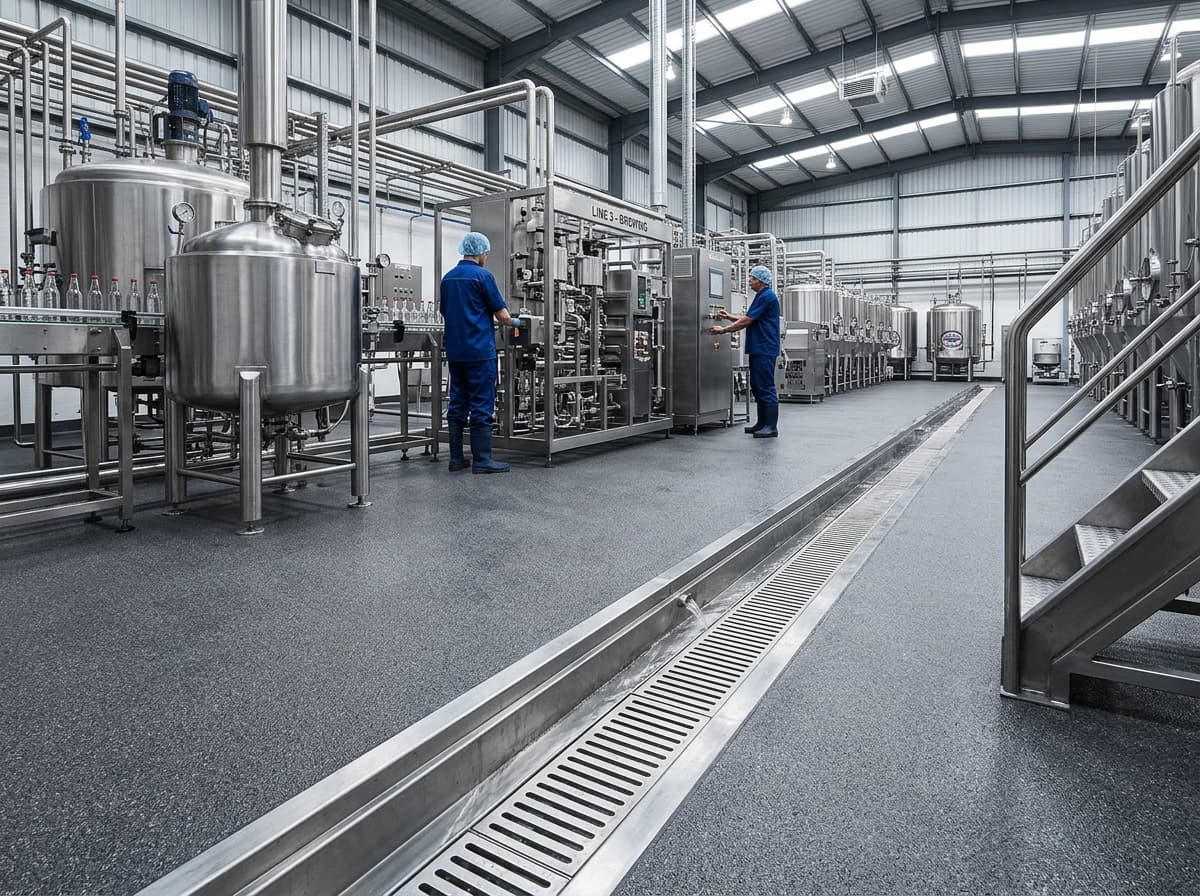
Food and beverage processing plants in Bangladesh require HACCP and ISO 22000 compliant heavy-duty Polyurethane (PU) screed flooring (4mm to 9mm). PU screed resists boiling water, steam cleanings (-40°C to +120°C), organic food acids (lactic, citric, animal fats), features silver-ion antimicrobial agents to eliminate bacterial colonization, and provides certified slip resistance (R11-R13) in constantly wet conditions.
Key Engineering Takeaways
- Organic food acids (milk lactic acid, citrus fruit acids, animal blood) rapidly dissolve cement grout in tiles and degrade standard epoxy.
- Heavy PU screed withstands boiling steam washdowns up to 120°C without blistering or delaminating from the concrete slab.
- Seamless radius wall coving and stainless steel drainage channel integration prevent bacteria, mold, and insect breeding pools.
- Troweled texture finishes achieve DIN 51130 R11 to R13 slip resistance ratings, safeguarding wet workers from hazardous slips and falls.
1. The Extreme Hazards of Food Processing Floors
Food and beverage facilities—including dairies, commercial bakeries, poultry processing, fish freezing, and beverage bottling plants across Bangladesh—present one of the harshest environments for any building floor.
Floors are continuously exposed to corrosive organic acids (lactic acid from milk, acetic acid, citric acid, animal fats, and blood) that aggressively attack calcium carbonate in concrete and dissolve tile grouting. Furthermore, facilities undergo severe thermal shock from boiling wash water and steam cleaning.
2. Why Ceramic Tiles and Standard Epoxy Fail
Traditional quarry tiles rely on cementitious or thin epoxy grout lines. Under heavy forklift transit and acidic washdowns, grout lines crumble and dislodge. Bacteria, listeria, and mold breed in the porous damp gaps beneath the tiles, producing foul odors and failing international food safety audits.
Standard epoxy softens when exposed to hot water washdowns above 60°C and cracks under the thermal shock of steam hoses.
3. The PU Concrete Screed Advantage
Heavy-duty PU concrete screed (applied at 6mm to 9mm) is a hybrid polyurethane-cement formulation. It behaves like synthetic stone, matching concrete's thermal coefficient while providing absolute impermeability.
Integral Antimicrobial Chemistry: Formulated with ionic silver technology that actively disrupts bacterial cell walls, inhibiting 99.9% of bacterial growth across the floor.
Certified Slip Resistance: Textured quartz aggregates embedded throughout the matrix deliver R11 to R13 slip ratings even when flooded with water and vegetable oils.
Frequently Asked Questions
Is PU screed odorless and safe to install in an operational food plant?
Yes, our solvent-free polyurethane screeds are non-tainting and odorless. They can be applied in adjacent plant bays without imparting off-flavors to food inventory.
How are drainage channels detailed with PU screed?
Technicians cut mechanical anchor grooves parallel to stainless steel channels and trowel the PU screed flush with the metal edge, creating a seamless, leak-proof drainage transition.